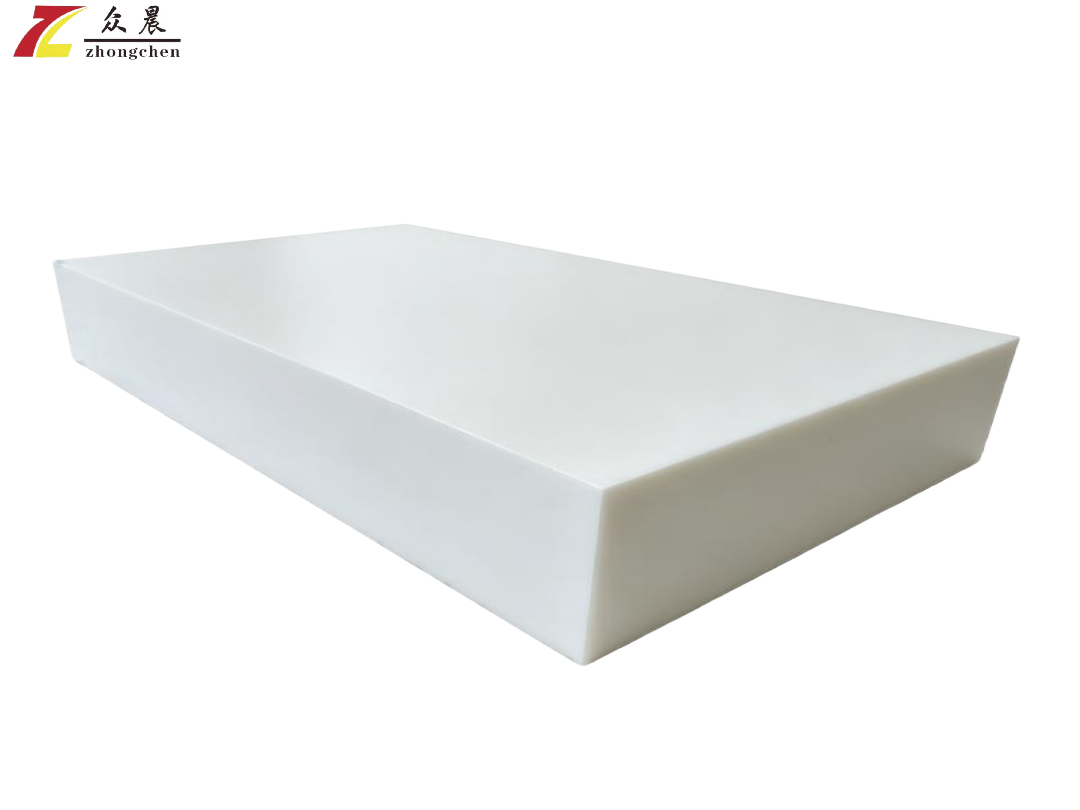
Sub Product
Custom UHMWPE Sliding Blocks for Industrial Machinery
Sliding blocks are used in industrial machinery to guide movement, support moving structures and provide replaceable contact surfaces.
Product details
Custom UHMWPE Sliding Blocks for Industrial Machinery quotation details
- Material: UHMWPE (Ultra High Molecular Weight Polyethylene)
- Dimensions: According to drawing or sample
- Processing: Cutting, drilling, milling and CNC machining supported
- Mounting: Holes, slots, grooves or recesses according to drawing
- Customization: Dimensions and machining requirements can be customized
- MOQ: Flexible according to order quantity
- Packaging: Export standard packaging
- Lead Time: Depends on size, quantity, and processing requirements
- Trade Terms: EXW, FOB, CIF available
- Please provide block dimensions, quantity, application, and machining requirements for an accurate quotation.
Overview
Sliding blocks are used in industrial machinery to guide movement, support moving structures and provide replaceable contact surfaces. These components may operate under repeated sliding contact, mechanical loading, abrasion and occasional impact.
UHMWPE sliding blocks are considered for applications where low friction, wear resistance and lightweight construction are important.
UHMWPE, or Ultra High Molecular Weight Polyethylene, is a thermoplastic engineering material widely used in wear components and material handling equipment. It can be machined into different block shapes, profiles and mounting configurations according to the equipment design.
ZCUHMWPE supplies custom UHMWPE sliding blocks and can review dimensions, material requirements, machining features and inspection criteria based on customer drawings or samples.
An UHMWPE sliding block is a machined polymer component that provides a sliding or guiding surface between moving and stationary equipment parts.
It can be installed in machinery where metal-to-metal contact needs to be replaced with a suitable polymer contact component.
Industrial machine guides
Conveyor support systems
Sliding equipment structures
Material handling machinery
Automated production equipment
Replaceable wear and guide components
The block geometry and material grade should be selected according to the actual movement, loading and installation requirements.
Low-Friction Sliding Surface
UHMWPE has naturally low-friction characteristics, which can be useful for selected sliding interfaces.
The actual sliding behavior depends on the mating surface, contact pressure, movement speed, surface condition and operating environment.
Wear Resistance
Sliding blocks may experience continuous or intermittent contact. UHMWPE is widely used in industrial wear applications and can be considered for replaceable guide and sliding components.
Wear life should be evaluated against the actual operating conditions rather than assumed from the material name alone.
Impact Performance
Some sliding components experience impact when machinery starts, stops or changes direction.
UHMWPE may be considered where impact performance is relevant. The block geometry, support structure and loading conditions should be reviewed before material selection.
Corrosion and Moisture Resistance
UHMWPE has low water absorption and resistance to many common chemicals. It may be suitable for selected wet industrial environments.
Chemical compatibility should be checked for the specific substance, concentration, temperature and exposure duration.
Lightweight Design
Compared with many metal components, UHMWPE sliding blocks are lightweight. This can be useful for moving assemblies and equipment where component weight is a design consideration.
UHMWPE sliding blocks can be used as guide components in machinery with linear or guided movement.
The design should consider the direction of movement, contact area, mounting structure and required clearance.
Selected conveyor structures use sliding blocks to guide moving assemblies or protect contact surfaces.
When specifying a conveyor sliding block, provide the equipment drawing, installation position and expected operating conditions.
Material handling machinery may include moving supports, sliding interfaces and replaceable wear components.
UHMWPE blocks can be evaluated for selected applications where wear resistance and low friction are required.
Automation systems may use custom guide blocks and sliding supports to position or guide moving structures.
For these applications, dimensional accuracy, mounting-hole position and assembly clearance should be identified on the drawing.
Some heavy-duty machinery uses polymer blocks as replaceable contact components. In these applications, load, contact pressure, support spacing and impact conditions require particular attention.
Do not select a block solely by its external dimensions. The working conditions must be reviewed.
Custom Dimensions and Machining
UHMWPE sliding blocks can be reviewed according to customer drawings, samples or specified dimensions.
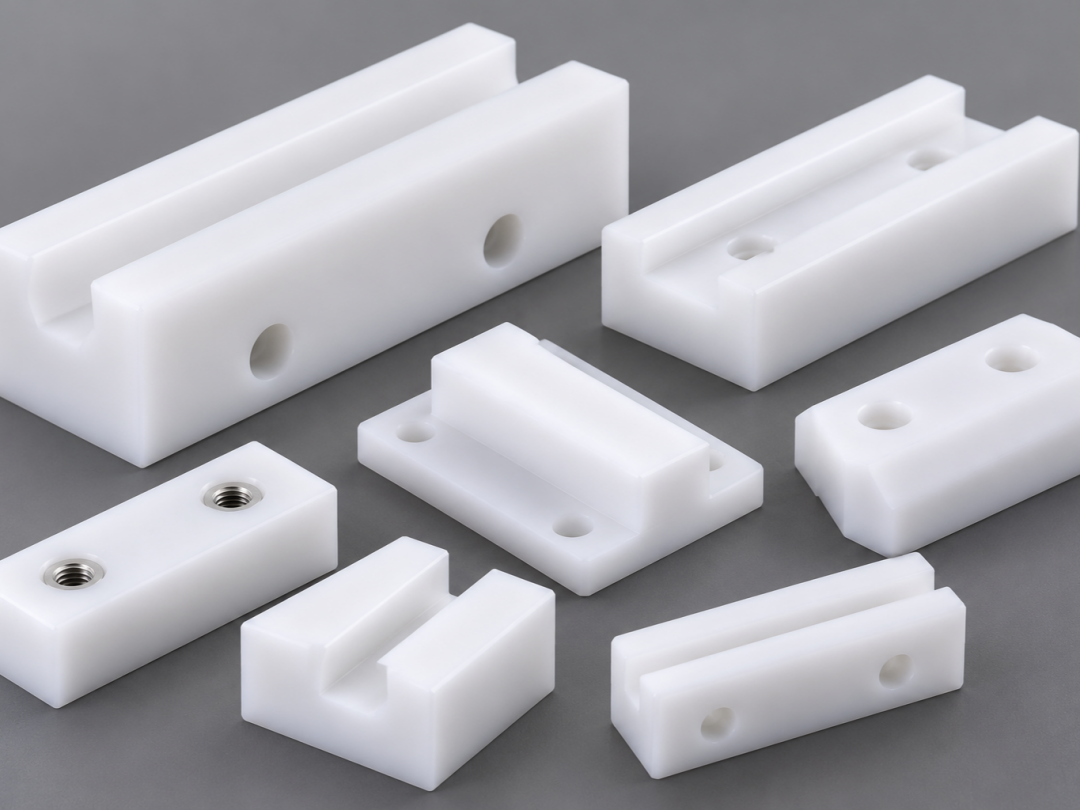
Complex sliding blocks may include stepped profiles, grooves, countersinks, slots and multiple mounting holes. A 2D drawing or 3D model is recommended.
Important Design Considerations
Load and Contact Area
Provide the expected load and contact area. These details help the manufacturer understand the operating requirements.
Sliding Speed and Movement
Identify whether the component operates continuously, intermittently or with frequent starts and stops.
Temperature
Specify the normal and maximum operating temperatures. Material suitability should be reviewed for the selected grade and actual working conditions.
Mounting Method
Confirm whether the block is bolted, clamped, recessed or installed using another mechanical arrangement.
Dimensional Tolerance
Identify the dimensions that determine assembly fit. Avoid applying unnecessarily tight tolerances to every feature without a functional reason.
For an accurate quotation, provide:
Part drawing or sample
Required material grade
Length, width and thickness
Hole positions and mounting details
Critical tolerances
Operating load and movement conditions
Operating temperature
Required quantity
Inspection and documentation requirements
Photographs of the installed component can also help clarify its position and function.
Quality Inspection
Inspection can be arranged according to the approved drawing and purchase requirements.
Overall dimensions
Thickness and width
Hole diameter and position
Groove and slot dimensions
Flatness, where specified
Surface and edge condition
Assembly-related features
Material testing, batch records and order-specific inspection documents should be confirmed before production.
ZCUHMWPE manufactures UHMWPE sheets, rods, wear liners, chain guides and custom machined components for industrial applications.
Our team can review sliding block drawings, machining features, material requirements and inspection details before quotation.
They are used as sliding and guiding components in machinery, conveyors, material handling systems and selected automated equipment.
Can sliding blocks be made according to drawings?
Yes. Dimensions, mounting holes, grooves, slots and other machining details can be reviewed according to 2D drawings, 3D models or approved samples.
How do I choose the right block thickness?
Thickness depends on the equipment design, support, load, contact area, wear allowance and installation method. Provide the application details for review.
Can UHMWPE sliding blocks replace metal blocks?
They may be suitable for selected applications, but replacement requires checking load, temperature, movement, clearance and structural requirements.
Provide the drawing, material requirements, quantity, application, operating conditions and critical tolerances.
Request a Custom Sliding Block Quotation
Send your part drawing, sample information, required dimensions, quantity and operating conditions to ZCUHMWPE. Our team can review the machining and material requirements for your project.