
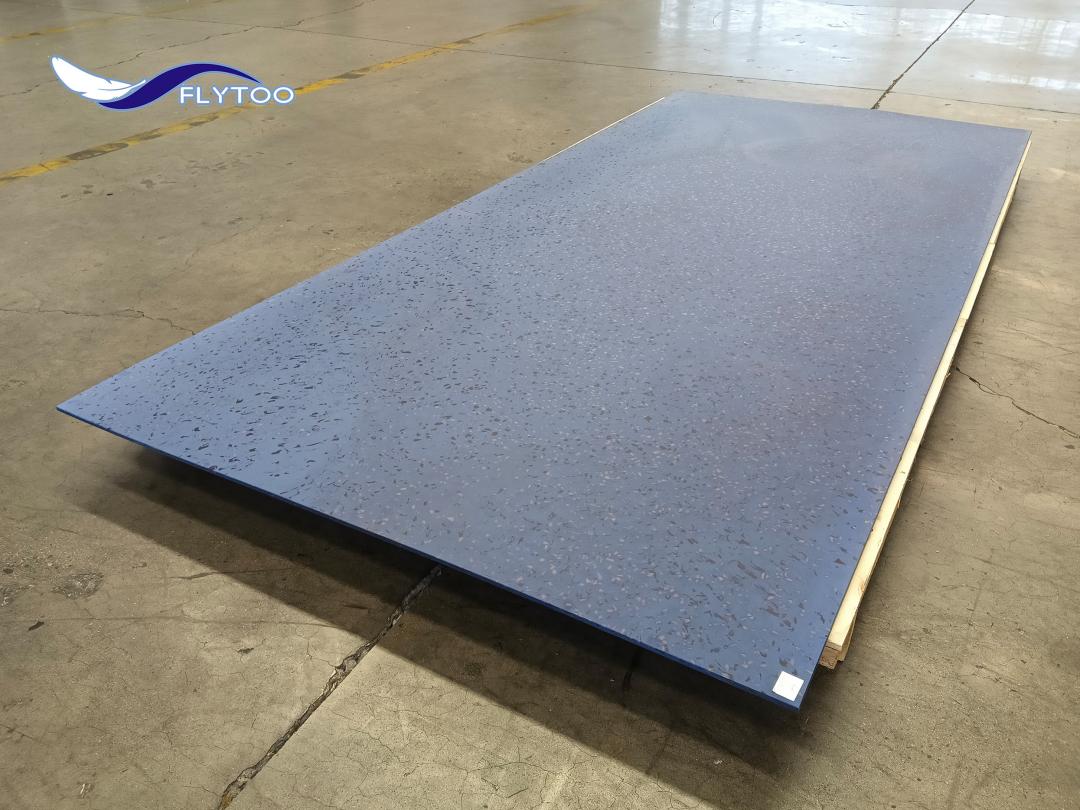
Chemical exposure can significantly shorten the service life of conventional materials. Corrosion, surface degradation, and chemical attack may lead to frequent replacement and unexpected equipment downtime.
UHMWPE is often considered when both wear resistance and chemical resistance are required.
Resistance to Common Industrial Chemicals
UHMWPE generally provides good resistance to many acids, alkalis, salts, and other commonly encountered industrial chemicals. This allows it to be used in selected environments where conventional metals may be vulnerable to corrosion.
The actual resistance depends on the chemical concentration, temperature, exposure time, and operating conditions.
An Alternative to Corrosion-Prone Materials
In some industrial environments, metal surfaces can gradually corrode after prolonged chemical exposure. UHMWPE does not rust and can provide a non-metallic contact surface.
This can be useful for tanks, chutes, material handling equipment, protective components, and chemical-processing systems.
Chemical Resistance and Wear Resistance
One advantage of UHMWPE is that chemical resistance can be combined with excellent abrasion resistance. In applications where abrasive materials and chemicals are present simultaneously, this combination can be particularly valuable.
For example, material handling systems may process wet or chemically contaminated bulk materials while continuously experiencing sliding and impact.
Important Factors Before Selection
Chemical compatibility should always be evaluated based on the actual operating environment. Temperature, concentration, exposure duration, mechanical loading, and the presence of multiple chemicals can all influence performance.
For critical applications, customers should provide the chemical name, concentration, operating temperature, and expected exposure conditions to the manufacturer.
Conclusion
UHMWPE can provide an effective non-metallic solution for many industrial environments where corrosion, chemical exposure, and wear are concerns. Proper material selection based on actual operating conditions helps maximize service life and reliability.