
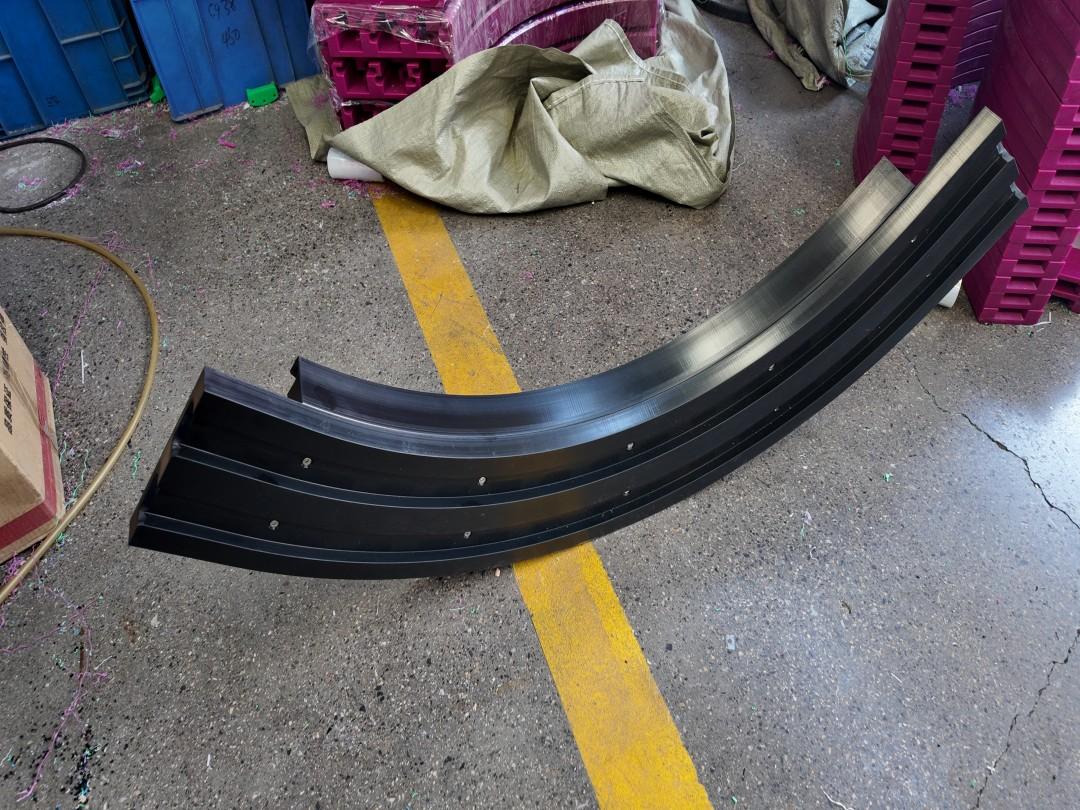
When specifying UHMWPE chain guides for conveying systems, engineers and purchasing managers must evaluate several technical parameters to ensure reliable performance. Conveyor applications usually involve chain guides, guide rails, wear strips and low-friction sliding parts that require precise engineering. Selecting the appropriate components involves reviewing the buyer's drawing, dimensions, quantity, application conditions and required documents. Product-specific material, performance and certification requirements are confirmed before quotation to align with project specifications.
Evaluating profile and chain compatibility
The first step in selecting these polymer guide components is a thorough profile and chain-compatibility review. The geometry of the guide must match the specific chain type used in the conveying line to prevent derailment and excessive wear. Engineers should verify that the cross-sectional profile accommodates the chain rollers or links without binding. This evaluation ensures smooth operation across the entire conveying system. Proper alignment between the guide profile and the chain reduces mechanical stress on both components during continuous operation.
Beyond basic geometry, the interaction between the guide surface and the chain determines the overall efficiency of the conveying line. Low-friction sliding parts are essential for minimizing energy consumption and reducing heat generation at the contact points. When evaluating compatibility, consider the operating speed and the load carried by the chain. A well-matched profile distributes forces evenly, preventing localized wear that could lead to premature failure. This careful matching process is fundamental to maintaining consistent throughput in industrial conveying applications.
Dimensional accuracy and mounting details
Accurate dimensions are critical for proper installation and long-term functionality. Every order requires confirmation of length, hole pattern and mounting detail by drawing. These machined profiles include holes, slots and mounting details tailored to the specific conveyor frame. Providing detailed engineering drawings allows manufacturers to produce components that fit precisely into existing equipment. Without accurate dimensional data, misalignment can occur, leading to increased friction and accelerated degradation of the sliding surfaces.
Mounting configurations vary significantly depending on the conveyor design. Some installations require countersunk holes for flush mounting, while others utilize slotted designs to allow for thermal expansion or adjustment during setup. The spacing between mounting points must be calculated to prevent sagging under operational loads. Engineers should also account for the thickness of the component relative to the available clearance within the conveyor structure. Detailed drawings eliminate ambiguity and ensure that the manufactured parts integrate seamlessly with the mechanical framework.
Material and dimensional inspection support
Quality assurance plays a vital role in the procurement process. Buyers should seek suppliers that offer material and dimensional inspection support to verify compliance with specifications. This support typically includes checking tolerances against the provided drawings and confirming that the raw material meets the required standards. Inspection protocols help identify deviations before shipment, reducing the risk of installation delays. For overseas buyers, having documented inspection results provides confidence that the delivered components will perform as expected in their specific conveying environment.
Environmental considerations for conveying applications
Conveyor lines often operate in challenging environments where moisture, chemicals or temperature fluctuations are present. Wear strips reduce friction between chains, belts and guide surfaces, but their effectiveness depends on the surrounding conditions. In food processing, beverage production or pharmaceutical manufacturing, equipment frequently undergoes rigorous cleaning cycles. Components installed in these areas must withstand repeated exposure to water and cleaning agents without degrading. Understanding the environmental context helps engineers select materials that maintain their structural integrity over time.
A key property for wet and washdown conveying areas is low moisture absorption. Materials that absorb water can swell, altering critical dimensions and causing interference with moving chains. Swelling also compromises the mechanical strength of the guide, potentially leading to cracking or deformation under load. By prioritizing polymers with minimal water uptake, facilities can maintain tight tolerances even in high-humidity environments. This characteristic is particularly important for automated conveying systems where precise alignment is necessary for sensors and sorting mechanisms to function correctly.
Integrating guides into conveyor lines
Successful integration requires coordination between the component supplier and the facility engineering team. UHMWPE chain guides and guide rails for conveyor lines must be positioned to support the chain throughout its travel path, including curves and inclines. The transition points between different guide sections require special attention to prevent catching or snagging. Properly designed transitions ensure continuous, smooth movement of the conveyed products. Collaboration during the design phase helps identify potential interference issues before manufacturing begins.
Purchasing managers should also consider the total lifecycle cost when evaluating options. While initial price is a factor, the durability and maintenance requirements of the installed components significantly impact long-term operational expenses. Components that resist wear and maintain low friction reduce the frequency of replacements and minimize unplanned downtime. Reviewing application conditions thoroughly before finalizing an order ensures that the selected solution matches the operational demands. This comprehensive approach to selection supports efficient and reliable material handling across diverse industrial sectors.