
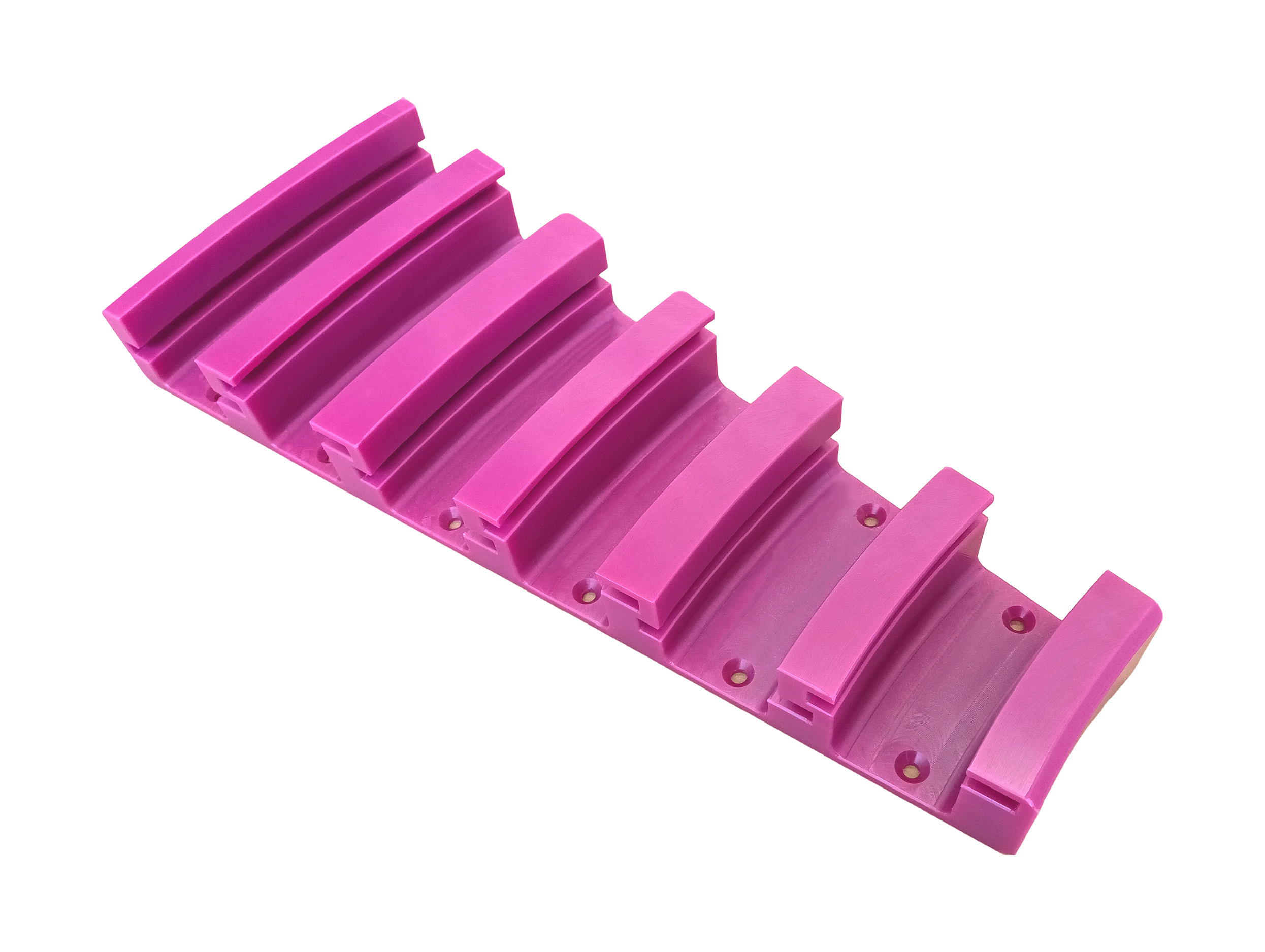
UHMWPE (Ultra High Molecular Weight Polyethylene) is one of the most popular engineering plastics because of its excellent wear resistance, low friction coefficient, impact strength, and chemical resistance. However, when it comes to CNC machining, maintaining tight tolerances can be challenging compared with metals or more rigid engineering plastics.
Understanding the reasons behind dimensional changes is important for manufacturers producing UHMWPE machined parts, wear pads, bushings, rollers, and other precision components.
Why Is UHMWPE Difficult to Hold Tight Tolerances?
Unlike metals, UHMWPE has a relatively low modulus of elasticity, which means the material is more flexible and can deform under machining forces. During CNC machining, several factors can influence final dimensions.
1. Internal Stress Release After Material Removal
UHMWPE sheets may contain internal stresses from the manufacturing process. When a large amount of material is removed during machining, these stresses can be released and cause the part to move or change shape.
This is especially noticeable when machining large components or parts with uneven material removal.
2. Clamping Stress During Machining
Because UHMWPE is softer and more flexible than metals, excessive clamping force can temporarily deform the material. After removing the part from the fixture, the material may return partially to its original shape, causing dimensional variations.
Proper fixture design and controlled clamping pressure are important for achieving better accuracy.
3. Heat Generated During Machining
Although UHMWPE has good chemical and wear resistance, it has a relatively low heat resistance compared with metals. Heat generated from cutting friction can cause thermal expansion during machining.
If the machining temperature changes significantly, the final dimensions may differ after the part cools down.
4. Material Flexibility and Elastic Recovery
UHMWPE can deform slightly under cutting pressure and recover after the cutting tool passes. This elastic recovery may affect surface finish and dimensional accuracy, especially when machining thin walls or precision features.
How to Improve UHMWPE Machining Accuracy
A common approach for precision UHMWPE machining is:
Rough Machining → Relax / Stress Relief → Finish Machining
During rough machining, extra material is left for the final finishing operation. After roughing, allowing the component to relax helps reduce dimensional movement caused by released stress.
The final finishing pass can then achieve better dimensional control and surface quality.
Additional Tips for Precision UHMWPE Machining
- Use sharp cutting tools designed for plastics.
- Avoid excessive cutting heat and friction.
- Minimize unnecessary clamping force.
- Consider material stress relief before final machining.
- Allow enough finishing allowance after rough machining.
- Optimize cutting parameters according to part size and geometry.
Applications Requiring Accurate UHMWPE Components
Proper machining control is essential for UHMWPE components used in demanding applications, including:
- UHMWPE wear liners for mining and bulk material handling
- UHMWPE conveyor components
- UHMWPE bushings and bearings
- UHMWPE rollers and guide rails
- Custom CNC machined UHMWPE parts
Conclusion
UHMWPE is an excellent engineering material, but its flexibility, internal stress, and thermal behavior make precision machining more challenging than machining metals.
By controlling machining stress, managing heat, and following a proper roughing and finishing process, manufacturers can achieve stable dimensions and high-quality UHMWPE components for industrial applications.