
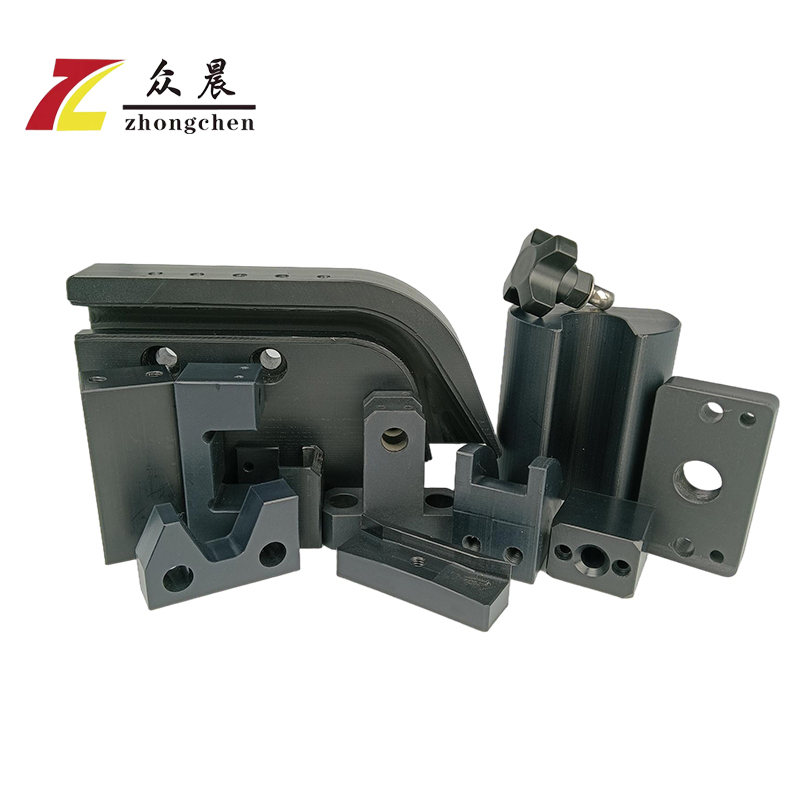
Engineering plastics are increasingly replacing metals in applications where lightweight construction, low friction, and corrosion resistance are required.
UHMWPE and nylon are two commonly considered materials for sliding and wear-related components. However, they are not interchangeable in every application.
Friction Performance
UHMWPE is well known for its low-friction characteristics. This makes it attractive for sliding surfaces, guides, wear strips, and other components where minimizing friction is important.
Nylon can also provide good sliding performance, but the friction characteristics depend on the specific grade and operating conditions.
Wear Resistance
UHMWPE provides excellent abrasion resistance and is frequently selected for applications involving continuous material movement and abrasive contact.
Nylon can also provide good wear performance, particularly in appropriately designed mechanical components, but the best choice depends on the specific load and working environment.
Moisture Absorption
One important difference is moisture behavior. Nylon can absorb more moisture from the surrounding environment, which may affect dimensions and mechanical properties.
UHMWPE has very low water absorption, making it advantageous in many wet or humid environments.
Impact Resistance
UHMWPE is known for its excellent impact resistance. This makes it suitable for applications involving repeated impacts or sudden mechanical loads.
How Should Engineers Choose?
UHMWPE may be preferred when the application requires:
Very low friction
High abrasion resistance
Excellent impact resistance
Low moisture absorption
Corrosion-free operation
Nylon may be suitable when different combinations of strength, stiffness, machinability, temperature performance, and cost are required.
Conclusion
There is no universal winner between UHMWPE and nylon. The correct choice depends on the application requirements, including load, speed, temperature, moisture, abrasion, impact, and required service life.
For sliding and wear applications exposed to moisture or heavy abrasion, UHMWPE can be a particularly attractive engineering plastic option.