
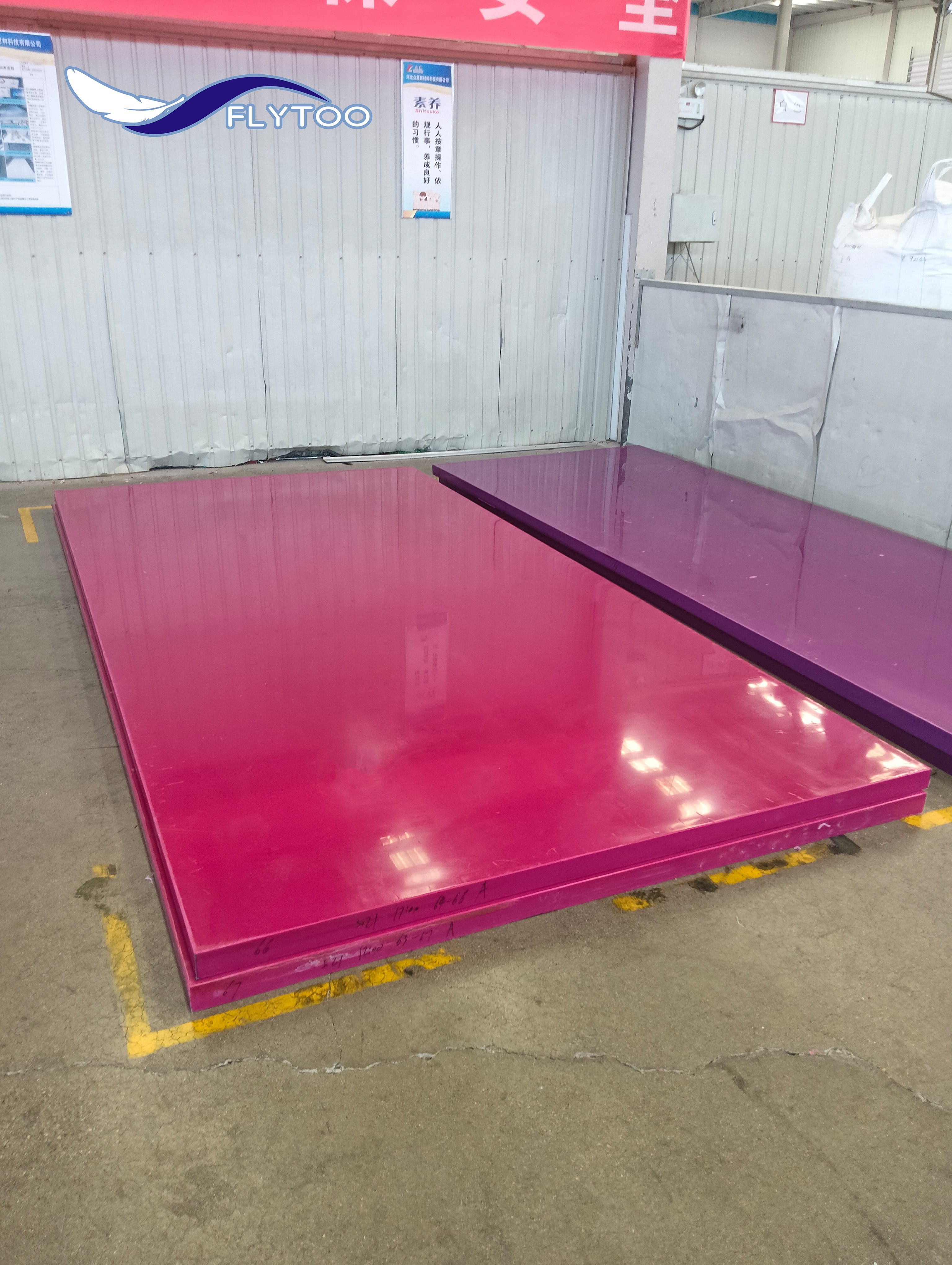
Industrial machinery often requires components that allow heavy structures or materials to move smoothly while minimizing friction and wear.
UHMWPE sliding blocks can provide a practical solution for these applications.
Smooth Sliding Performance
UHMWPE has a low-friction surface that allows components to slide against suitable mating surfaces with relatively low resistance.
This can help reduce the force required to move equipment or materials.
High Wear Resistance
Sliding blocks may experience continuous contact and repeated movement. A material with good abrasion resistance can help extend component service life and reduce replacement frequency.
UHMWPE is particularly useful when sliding contact is combined with abrasive working conditions.
Impact Resistance
Industrial sliding components may also experience sudden loads or impacts. UHMWPE has excellent impact resistance, which can help it withstand repeated mechanical shocks in appropriately designed applications.
Common Applications
UHMWPE sliding blocks may be used in:
Heavy material handling systems
Industrial machinery
Conveyor structures
Steel handling equipment
Marine equipment
Construction machinery
Storage and transfer systems
The exact design depends on the load, movement direction, contact surface, and installation method.
Custom Dimensions
Sliding blocks can be manufactured in different shapes and dimensions. Customers can specify length, width, thickness, holes, grooves, chamfers, and other machining requirements.
Custom production allows the component to match existing equipment and reduce modification work during installation.
Conclusion
UHMWPE sliding blocks combine low friction, wear resistance, and impact resistance in a lightweight non-metallic component. For heavy-duty applications, proper calculation of load, contact pressure, movement speed, and operating temperature is essential before final material selection.